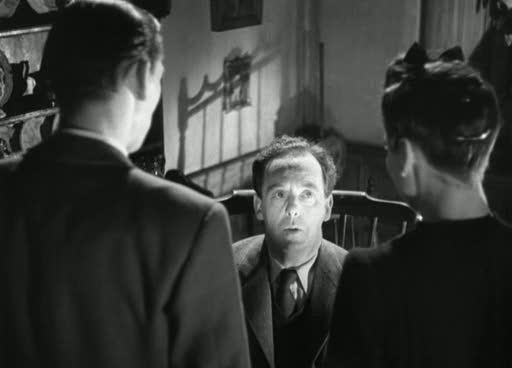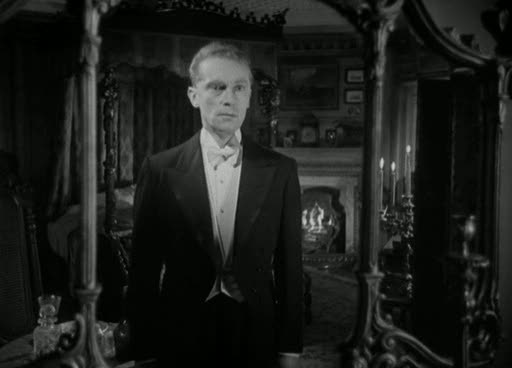
Akai Hashi no Shita no Nurui Mizu [Warm Water Under a Red Bridge] (Imamura Shōhei, 2001, Japan | France)

This post comes as part of David CairnsThe Late Show blogathon over at Shadowplay.

Making its début as part of the main competition of the Cannes Film Festival in the spring of 2001, Warm Water Under a Red Bridge proved to be Imamura Shōhei’s final film, save for a short segment in the portmanteau 11’9”01 September 11 (2002) of the following year, and came in the then-veteran director’s fiftieth year in the filmmaking business. His varied career saw him begin as assistant Ozu Yasujirō, become a key member of the Nuberu bagu (Japanese New Wave), ‘retiring’ into making documentaries after a high-profile box-office flop, before eventually returning to critical acclaim and a record-equalling two Palme d’Or wins.

In such a long working life, a number of distinct phases emerge from the whole, the final of which seems to begin after the eight-year hiatus following Kuroi ame [Black Rain] (1989) with Unagi [The Eel] (1997), the Cannes winner with which Warm Water… shares many similarities. Like that earlier film, it takes as its protagonist a man who relocates to a small town to start a new life, though the focus here seems to be on a mischievous sense of mystery rather the murderous melodrama with which The Eel begins. Yosuke (Yakusho Kōji) is an unemployed former salaryman with apparently few prospects for finding a job, much to the chagrin of his unforgiving, nagging wife. When his elderly friend Taro dies, he remembers that he informed him about a valuable gold Buddha he has deposited in a small fishing town many years before, and urges his friend to follow his directions to find it and sell for his own profit.

Once there, Yosuke quickly locates the key geographical clue – the red bridge which stands over the river running through the town – and follows the occupant of the house adjacent to it to the supermarket where he is shocked to witnesses two things: firstly, that the woman, Saeko, is depositing items from the cheese aisle into her handbag without paying for them and, more disturbingly, she is somehow leaking liquid onto the floor beneath her. Disturbed, he follows her back to her house where he soon discovers her strange biological quirk, best not described in too much detail here but what comes to be known in the film as ‘venting’, which she may only achieve by either shoplifting or by sexual stimulation.

The fast descent into the surreal confirms the film to be what it self-describes as an ‘impossible tale’, and slides into obviously metaphorical whimsy. There follows a rash of Freudian symbolism (signposted by the ‘water’ and ‘red bridge’ of the title) including a strange hallucinatory dream incorporating Yosuke’s entry into to a womb-like state composed of stars (which augments the theme of fertility raised by Saeko’s exaggerated medical condition), repeated flashbacks to Taro’s inane quasi-philosophical ramblings about erectile dysfunction, and another younger character’s obsession with his own ‘precious life essence’. The plotting, after its initial coherence, becomes increasingly scattershot, haphazardly throwing in a visit to a state-of-the-art neutrino observatory, an odd flashback to Saeko’s mother’s water-bound death, more venting, more clumsy flashbacks and some occasional documentary-like shots aboard a fishing vessel.

When considering Imamura’s later films, it is perhaps too easy to focus on the negative and what he had lost in terms of his filmcraft by this time. Gone are the obviously strong, central female characters of his 1960s films which, rightly or wrongly, had him labelled as a director of feminisuto (feminist) films, and his famously ‘anthropological’ portrayal of the lower classes of Japan scarcely seen in the respectable canons of Ozu, Mizoguchi and Naruse. Mostly absent too is the strongly observational style, which at their best disintegrated the borderline between documentary and fiction (see the superb Ningen Johatsu (1967)), or showed glimpses of social order in pre-industrial Japanese cultures (Kamigami no Fukaki Yokubo (1968), Narayama Bushiko (1983)). The late-period films seem whimsical and inconsequential in comparison.

This insistence on looking back on former glories does the films of Imamura’s late phase a disservice. What is notably different about them is that they feel so much more laidback, less motivated by a reactionary anger, and more upbeat, allowing the comedic side honed by the influence of his mentor Kawashima Yūzō to be shown more fully. Perhaps too, he was calmed by the influence of working with his eldest son Tengan Daisuke, screenwriter here and on The Eel and latterly a collaborator with Miike Takashi (himself a graduate of Imamura’s own Yokohama Vocational School of Broadcast and Film).

While lacking the bite of his best work then, what gives Warm Water… its strange charm is this newly-found air of relaxation in the director’s work, the film’s assembly of a small-town world and its population with a host of curious characters – the grandmother who obsessively writes clairvoyant fortune messages all day, the African college student running around the town being tailed by his bicycle-riding, baseball-bat-wielding trainer barking orders at him through a megaphone, the old fishermen of the town, their young rival and his over-exuberant girlfriend – and a host of other minor details and offbeat asides.

Perhaps this is not enough for fans of his more ‘important’ films, but Warm Water… does offer a modified version of the director’s eye for the anthropological; Saeko’s ‘venting’ drains out into the river, which sends the local fish and seabirds into a kind-of frenzy and in turn ensures a bumper haul for the local fishermen. If Imamura’s earlier films more directly showed human behaviours to be analogous to those of animals such as snakes, insects and pigs, then what these later films show is a more serene vision, of man as an essential part of the balance of nature. The film’s final shot, though primarily a terrifically funny visual gag, also serves this vision: a superimposed rainbow, apparently caused by a particularly large ‘vent’ by Saeko; an oddly contrived moment of transcendence which closed this great director’s career.

The Social Network (David Fincher, 2010, USA)

It ought to come as little surprise that The Social Network opens with a bad date which culminates in the ending of a relationship, since the protagonists in David Fincher’s films seldom seem to be having a good time in the amour stakes. If they are not recently divorced (Nicholas Van Orton in The Game, Panic Room‘s Meg Altman) then their marital relationships are showing signs of undergoing severe strain (David Mills in Seven, Robert Graysmith in Zodiac); if they are indeed ‘getting some’ at all then they are either not cognizant of the fact (Fight Club‘s unnamed protagonist), fatally unable to complete their Oedipal trajectory by dint of ageing backwards (The Curious Case of Benjamin Button) or, most unfortunately of all, subject to impregnation by a xenomorphic alien creature (Alien 3).

It is worth focusing on the opening scene for a number of reasons. Firstly, it illustrates how surprisingly well the combination of writer and director – both distinctive artistic voices in their own right – are well matched here and enhance each others’ strong suits rather than compromise them. The Aaron Sorkin-penned brashly-inarticulate dialogue sits perfectly with David Fincher’s famously frenetic visual style, though the real standout in this first scene is perhaps the rapid cross-cutting of co-editors Kirk Baxter and Angus Wall, a breathless velocity which sets the pace for what will become a whirlwind trip through the time between Facebook’s inception and its rapid spread across the globe.

The second function of the scene is succinctly to introduce us to the character of Mark Zuckerberg. What we can immediately glean is that he is a spiteful, sharp-tongued yet socially awkward high-achiever whose apparent main concern is not the enjoyment of life and study on the campuses at Harvard, but a zealous desire to gain entry into the freemason-like social sphere of its final clubs which he believes will be the making of him. If this is more than enough for his appalled girlfriend Erica to call time on their relationship and seize the opportunity to jump ship, the scene for the viewer foregrounds the question of the film’s main character’s curious motivations, which in two flash-forward time frames will be repeatedly called into question.

This initial scene also facilitates the first plot point: the drunken, spurned Zuckerberg is spurred into setting up the ‘Facemash’ website which will quickly gain him enough notoriety to bring him to the attention of the blue-blooded Winklevoss twins, whose proposed Ivy League dating site plants the seed for the idea which he will make his own. But so too does it confirm the film’s existence as a work of fiction, given that the date we are witness to could never have occurred in reality since the character of Erica has no real-life counterpart. If the factual accuracy of The Accidental Billionaires – Ben Mezrich’s book upon which the film’s screenplay is based – is questionable then evidently so must be Fincher and Sorkin’s account.

This is no sleight against the film. If the prospect of a narrative based around two injunctions brought against the maker of a website hardly sounds enticing, then the fictive world which is rendered is anything but. As Zuckerberg drunkenly codes his initial site, the film cuts between him and scenes of final club sophomores partying with local nubiles specially shipped-in for their entertainment, the scene more closely resembling the glossy abandon of an alcohol advertisement than anything approaching reality. The worlds of Fincher’s films often have a sense of the unreal about them, and that this time his story does not centre on serial killers, paranoiacs or sado-masochistic basement brawlers does not mean that it has any greater degree of fidelity to the real world.

In many ways, The Social Network is an interesting companion-piece to the director’s previous works, most obviously Zodiac, another film ostensibly based on ‘facts’ but introducing a large degree of conjecture about events which may remain unknowable. But that film functioned in a different time, one in which information dissemination was slowed by technology – the scene where the police admit not to having a fax machine springs most readily to mind – and time passed laboriously with no progress. By contrast, The Social Network plays out in an age of instantaneous worldwide communication and global viral memes. If the protagonist of Fight Club is astonished to discover how quickly his titular phenomenon has spread, it comes as little surprise to Zuckerberg.

That the film’s events take place in the very-recent world of near-instantaneous communications technology is what lends the film its feeling of suspense, and the sense that the events taking place are metonymic of the zeitgeist is underlined by the key difference between the ‘mirror identical’ Winklevoss twins (other than their handedness): their attitude towards pursuing the individual who they feel has stolen their idea. While Tyler Winklevoss is keen to be seen to behave according to the more old-fashioned, gentlemanly mores of Harvard social convention, Cameron Winklevoss seems to be more aware of the fact that the more time they allow Zuckerberg’s TheFacebook to gain the ascendancy, the further they set back their chances of pursuing him for theft.

Zuckerberg’s eventual ‘triumph’ over the Winklevoss twins in getting his Thefacebook out first and into social network hegemony is representative of a strange changing of the guard; the blue-blood Ivy League social groups which he so wanted to penetrate at the start of the film no-longer have relevance for him, as he moves his operation first to universities across the globe, and then to millions of public users. Facebook expands out from the cloistered intelligentsia to the wider proletariat, representing a triumph of bourgeois-capitalism over an antiquated quasi-feudal oligarchy. Ironically, the most humiliating evidence of the twins’ defeat comes at alongside a more literal defeat at that most bourgeois of occasions, the Henley Royal Regatta.

If The Social Network is about a character driven by his inability either to enter into the societal circles he wishes to inhabit or hold down a relationship, then it is not for long a sexless world which he and his co-founder Eduardo Saverin inhabit. Indeed, a key plot point is Zuckerberg adding the crucial element to Thefacebook: the ‘relationship status’ section. As membership of their site spreads across campus, so too does their own fame, and the former losers become unlikely lotharios. The real seduction, though, occurs later on when Zuckerberg meets Sean Parker, the Napster co-founder whose suave charm lures him away from Saverin and the stuffiness of New England academia and out to the more laidback, pseudo-bohemian lifestyle of California’s Silicon Valley. It feels analogous to similar events in Annie Hall, Parker very much the Tony-Lacey-like underhand villain, and Saverin’s evident distaste for West Coast hedonism the equal of Alvy Singer’s.

The film defies easy categorization. The pacing suggests a kind of thriller, though the subject matter makes this seem absurd. As a character study it is hardly a tragedy, nor is Zuckerberg’s story anywhere near a clear-cut one of rags-to-riches or of triumph against adversity. At its best it is actually closest to farce – the seriousness of the settings of the deposition hearings hilariously bearing witness to the petty squabbling and juvenile prankery of young adults – even to the point where a lawyer threatens to use one character’s supposed treatment of a live chicken to blacken his character. If Zuckerberg and Saverin are largely played straight, it is the exaggerated, cartoonish secondary characters which linger in the memory longest – the pathetic seriousness brought to the Winklevoss twins by Armie Hammer, and Justin Timberlake’s irresistibly debonair Sean Parker.

Ultimately, the sheer surface excitement of the story disguises the complexities of the film underneath; its three time-frames – the linear narrative of the main story and the two separate deposition hearings seen in flashforward – fit together so cohesively that their temporal relationship to each other is never muddied. What, though, is the message we are to take from the film? The deliberately deadpan ending makes clear that, in spite of his financial success and popular fame, Mark Zuckerberg has alienated himself from those who sought to get close to him, and even from this experience he has ultimately learned nothing. His response? Look up an old flame and click ‘add as friend’. What we do know is that he’ll be in for a long wait.

Madeo [Mother] (Bong Joon-ho, 2009, South Korea)

Kim Hye-ja in Bong Joon-ho's "Mother"

The exploration of the sometimes mysterious bond between a mother and her child is the kind of theme one might well expect to be best suited to straightforward melodrama but, ever the meddler with genre, Bong Joon-ho has crafted an engrossing detective-story thriller around the subject, a film which constantly defies the viewer’s expectations and offers both a moving portrayal of the power of the familial bond and a dark portrait of this link when pushed to its extremes. As well as being a play with familiar generic tropes, so too is his film a meditation on the importance of memory, set against the backdrop of a wider critique of male domination and female peripheralization in Korean society.

What characterized Bong’s previous two films, Memories of Murder (2003) and The Host (2006), was an obviously withering contempt for the patriarchal authorities contemporary to the periods in which they were set. In the former film, based on a real-life series of incidents in the late 1980s, a bungling police investigative team fail to catch a serial killer, while in the latter, the present-day residents of Seoul find themselves at the mercy of both their own paranoid government and the decidedly more gung-ho US authorities in the wake of an attack on the city by a gargantuan monster. In both films, it is the ordinary people who are made to suffer because of, or be scapegoats for, their public officials’ inadequacies.

Mother apparently continues this thematic concern by focusing on an unnamed mother’s struggle to clear her son Do-joon’s name after he is, she firmly believes, wrongly incarcerated and made an easy scapegoat for the brutal murder of a young schoolgirl. In trying to prove his innocence we see her comes up against over-worked detectives, violent police interrogators and – worst of all – her well-paid lawyer who turns out to be more concerned with scoffing buffets and drunkenly cavorting with escorts rather than helping her champion her son’s case.

The film is almost exclusively viewed from the point of view of Do-joon’s mother, and we are quickly inclined to feel sympathy for her when, in film’s first scene after the opening titles, we witness her cutting her finger with a large slicing machine while she is paying more attention to her son’s safety than her own. When Do-joon is hit by a passing car, the aggressive Jin-tae leads him to seek revenge on the driver at the local golf course, where we learn that Do-joon is mentally slow, forgetful and easily led by his more impulsive friend. Indeed, we see that while Jin-tae is capable of sporadic acts of violence, his meek friend is unable even to kick a car’s wing mirror without coming off the worst in the act.

Do-joon’s mother is, as any parent would be, concerned that her good-natured son continues to keep company with this ‘bad seed’, but their maternal relationship also seems at best off-kilter, and at worst positively unhealthy: though he is 27 years old, she still over-dotes on him as if he were an infant, and the virginal son still sleeps in his mother’s bed at night. In one tragi-comic scene she even feeds him ‘medicine’ while he stands in the street relieving himself against a wall; after he rushes off she tries to tidy up after him, scraping the urine away with her foot, and covering the spot with a nearby piece of metal.

The odd dynamic between mother and son seems strange but at this stage somewhat benign and as if it is being played for laughs, and when the harmless but distinctly un-savvy Do-joon gets hauled in by the police and roughed up by their interrogator in order to sign a confession, we naturally side with the mother in protesting his innocence, as well as suspecting Jin-Tae’s possible guilt. It is here that Mother shifts into a familiar detective-story mode, with the titular protagonist seeking clues to uncover the identity of the real killer, motivated both by her love (however strange) for her son and the apparent inability or unwillingness of the official channels of law enforcement to look beyond the circumstantial evidence of the case.

This is how the story appears to want to unfold as it settles down, and there is a sense of a return to his previous films’ concerns with the powerless oppressed struggling in the face of an uncaring bureaucracy. Our identification with the mother and her struggle has been uncomplicated, resting on easily identifiable premises: a vulnerable, elderly woman struggling against uncaring authorities to prove her mild-mannered son innocent and to turn suspicion towards his violent friend. Yet almost as soon as her own investigation begins she appears to come up against a dead end, one which turns at least one of these assumptions on its head. In classic detective-thriller tradition, and with more than a little hint of Twin Peaks, her sleuthing leads her to make some startling discoveries about her small town and she becomes embroiled in a much more sinister and potentially dangerous situation than she first had anticipated.

Mother‘s convoluted narrative about-turns not only maintain an admirable air of suspense for its 130 minute running time, but serve to undermine many of the assumptions and prejudices the viewer holds about the story and its characters. If Memories of Murder played on the tropes of the police procedural genre and The Host similarly toyed with the familiar mores of the family-drama-amidst-monster-attack movie, the film uses the setup of a detective-story to expose how the viewer becomes emotionally complicit with the depths of its main character’s moral elasticity without even realizing it – until, that is, it is too late. The beating heart of Bong’s film is a dark, twisted one which, as well as showing how familial bonds can be an empowering, all-conquering force for good, they are the same ones which can drive people to go too far. Nevertheless, lead actress Kim Hye-ja, familiar to Korean audiences for playing more placid matriarchs, conjures up a mesmerizing central performance as a quiet, subservient elderly mother steeled by her resolve to free her son, and it is hard not to be swept along by this woman’s sheer determination.

The film’s feminine title underlines the fact that there is a large focus on the cultural and social divide between the genders, and though the subject of female subjugation is not broached explicitly, it is one which is ever-present in the background. If men are not alternately portrayed as bullying, incompetent, pathetic, money-grabbing, self-serving, violent, whimsical or sexually rapacious creatures then, as in the case of the fathers of both Do-joon and murdered schoolgirl Moon Ah-jung, they are absent entirely. The question of Do-joon’s father is never raised, and at one stage his mother even suggests to one of her acupuncture clients that it was ‘medicine’ which made her pregnant with her son. By contrast, women are the efficient workers, the gossips who know what is happening in the community, the victims of bullying, taken advantage of sexually, or at the extremes are driven to drink or attempted suicide. The mourners at Moon Ah-jung’s wake are almost exclusively female.

Do-joon’s memory – or lack thereof – serves not merely as a device to initiate and maintain the central mystery plot, but also as a metaphor for his essential unknowability to his mother, regardless of how close their relationship is; to what extent his amnesia is selective by choice or otherwise is never made explicit, which leaves us as much in the dark as she is. One dramatic revelation about their past, however, offers some clue as to its cause, as well as suggesting that one thing he may not be able to remember is something that she chooses advantageously not to remind him of. It also serves to cast in darker hues both her character and her apparently unselfish servitude to him. By the end, we are left to guess the extent to which Do-joon is able to piece together what his mother has done; she, however, makes sure she takes steps never to remember, and the film’s memorable final shot serves as a poignant recapitulation of its equally striking first.

The film’s emotional zenith comes when the mother is called upon to visit JT, an adolescent with Downs’ Syndrome who has been captured after escaping from the sanitorium. She simply asks him if he has any parents, a mother? His negative reply causes her to break down – but is it entirely out of pity for him? Her relationship with her son may have empowered her to go to extraordinary, almost unthinkable lengths to save him, but as much as this moment comes as catharsis it also serves to remind her of the horrors she has witnessed too. All in the journey of a mother, though, one in which the ability to forget may well be as important as that to remember.

Mother is released on DVD on 20 September by Optimum Releasing.

Frightfest 2010 Roundup

Given the programming at this year’s Frightfest not only of a documentary about the political crackdown in the 1980s on the so-called ‘video nasties’, but also a remake of Meir Zarchi’s infamous I Spit on Your Grave (1978) and the presence of The Texas Chain Saw Massacre (1974) director Tobe Hooper, it seemed appropriate that the main talking-point of the festival should be the subject of film censorship. Unfortunately, the issue was raised not by what was screened but rather what was not screened: Srđan Spasojević’s extreme shocker A Serbian Film (2009), one which has played at festivals all around the world, was the subject of a query by Westminster Council who demanded that the film be sent to the BBFC for classification. The resulting judgement was that the film would require 49 cuts – amounting to nearly 4 minutes of footage – in order for it to be passed with an ’18’ certificate, a concession which the festival organisers refused to bend to, reluctant to have to be the only festival to screen an inferior, compromised version of the film.

This absence of the planned centrepiece of the Sunday evening – and arguably the entire festival itself – led to a feeling of disappointment with the programme as a whole; as much as Frightfests are remembered and talked-about for being the UK’s first-glimpses of instant classics such as Let The Right One In (2008) and Pan’s Labyrinth (2006), they are remembered as much for those more outré films which up-the-ante and leave festival-goers gleefully recounting to their fellow genre fans about what extreme experiences are to come – without A Serbian Film, there was to be no Martyrs (2008) or The Human Centipede (2009) equivalent this year.

Nevertheless, the festival still provided its usually eclectic abundance of splatter, shrieks and chuckles, and there were fewer complete duds this time around than I can recall in previous years – only Damned By Dawn (2009) stood out as the programme’s only completely unmitigated train-wreck. Opening film Hatchet II (2010) proved to be a suitably entertaining crowd-pleaser, a no-brains splatter-fest considerably improving on the general incompetence of its predecessor, while straightforward genre fare was also taken care of by Primal (2010), an Australian virus-in-the-wilderness film which handily reminded viewers that if one’s partner has turned into a flesh-eating monster one ought to reconsider one’s emotional attachments to them. The Dead (2009) was a grim, suitably tense and very handsomely photographed zombies-in-Africa piece which allowed the viewer a certain degree of freedom to draw allegories both to the continent’s AIDS epidemic and its sorry history of bloody civil wars, though its final reel lurched far too close to we-are-the-world sloganeering for my liking.

For those that wish to use the term (which is not to my liking), the ‘torture porn’ strain of US mainstream horror seemed to have reached a dead-end with some of the films this year. The remake of I Spit on Your Grave (2010) was a predictably pointless update of what was a fairly pointless original, and served not to convey any moral message but instead a limp excuse for gang-rape victim Jennifer to serve up some stupidly exotic ways of enacting her revenge on her assailants. Worse though was The Tortured (2010), a morally idiotic story about a couple whose child is murdered and who decide to enact their own punishment on the perpetrator when the law appears to them too lenient on him. An awful sub-TV-movie opening makes way for some dreadful moralizing, the film labouring under the impression that no-one has ever considered that ‘violence-begets-violence’ could possibly not be such a perfect moral schemata. Should be avoided at all costs.

By comparison, the other US offerings were so benign as to inspire little other than indifference. The Eli Roth-penned The Last Exorcism (2010) proved to be a mildly-diverting mock-doc-shocker about a charlatan exorcist whose fraudulent operation is tested by what could be a genuine case of demonic possession in a young girl. Buried (2010), the last-minute replacement for A Serbian Film, was a sometimes blackly-comic slice of Iraqsploitation consisting of Ryan Reynolds trapped underground in a coffin-like box, and proved to be an entertaining-enough 90 minutes of high-concept which one ought not to have too many complaints about, save for the obvious observation that it doesn’t hold a candle (or indeed Zippo lighter) to the sheer terror of the similarly-themed albeit brief coda of George Sluizer’s Spoorloos (1988).

The late night films – whose chief demand at the end of the long day of screenings is largely to keep the viewer awake – were as appropriate as ever, though I admit didn’t stay around for opening night’s Dead Cert (2010) for fear of glimpsing everyone’s least-favourite Zoo lifestyle columnist Danny Dyer. Alien vs Ninja (2010) was a suitably barmy and self-descriptive Japanese martial arts/monster flick replete with Roger Corman-esque extra-terrestrials, while Hong Kong film Dream Home (2010) was basically a warning not to place too much stock in property ownership unless one is prepared to go to extreme measures to ensure a reasonable asking price. The real highlight was The Loved Ones (2009), a superbly trashy Australian horror-comedy about a young girl who, spurned by her choice of date for the high-school dance, goes to extreme measures with her father to ensure she has her desired night to remember. A memorably gaudy colour palette and a wonderfully demented lead performance from Robin McLeavy helped make this a strong festival favourite.

A mixed bag from the British films present in this year’s lineup; I didn’t stick around for 13Hrs (2010) or Dead Cert but was led to believe that neither was in any way remarkable. Isle of Dogs (2010) for its first half looked like being an awful London gangster film but oddly began to veer off in many different genre directions past its midpoint; ultimately it was largely ill-conceived and executed, but carried a strange charm with its idiosyncrasies. More convincing was Cherry Tree Lane (2010), Paul Andrew Williams’ home-invasion thriller. Unfolding in real-time and firmly grounded in tough realism, it successfully evoked a feeling of terror, and yet on reflection I felt it to be a rather empty, purposeless exercise; perhaps this was the point. Best of all was F (2010), which director Johannes Roberts described best as a remake of Assault on Precinct 13 (1976) relocated to a British secondary school; what I perceived as a slight lack of suspense within it was more than made up for by a superb, richly-detailed script and a host of pitch-perfect performances from its cast.

A large number of festival attendees were very taken with Monsters (2010), a concoction of bug movie, travelogue and romance story, but personally I found its characters to be disinteresting and any political subtext was diminished by a rather touristy, romanticised view of Latin America. A better examination of the region was provided in Somos Lo Que Hay (2010), a downbeat story of an impoverished family of cannibals subsisting in a Mexican city, and which payed much more attention to their internal familial dynamics and socio-economic milieu than the grisly details of their feeding habits. Also worthy of note was Red White & Blue (2010), a revenge drama set in Austin, Texas which also ran at a genre-defying stately pace and pushed character to the fore in a way that was admirable, if not always successful.

My favourite film of the long weekend proved to be the terribly-titled Bedevilled (2010), a superb revenge shocker from first-time director Jang Cheol-so. Bearing similar hallmarks to those of his South Korean compatriot Bong Joon-Ho – in particular the heavy influence of Imamura Shōhei – the film carefully illustrates the cultural differences between the very modern Seoul and a nearby secluded, pre-industrial island through the behavioural disparities between two long-separated childhood friends, Kim Bok-nam and Hae-won. Both, though, suffer victimisation at the hands of men, clearly showing the enduring subjugation of women in the country, in spite of its economic progress. The film becomes less interesting as it progresses towards a straightforward revenge narrative and the framing story of Hae-won is somewhat ineffective, but on the whole the storytelling is exquisite, and it proves to be yet another example of why we must continue to look eastwards for many of the best shockers around.

Five to watch:

Bedevilled (Jang Cheol-so, 2010, South Korea)

The Loved Ones (Sean Byrne, 2009, Australia)

F (Johannes Roberts, 2010, UK)

Red White & Blue (Simon Rumley, 2010, USA)

Somos lo que hay [We Are What We Are] (Jorge Michel Grau, 2010, Mexico)

Dead of Night (Alberto Cavalcanti Charles Crichton Basil Dearden & Robert Hamer, 1945, UK) Part Two

Continued from Part 1

The sexual undertones present in Dead of Night‘s Christmas Party episode provide one of the many links to the following story, Robert Hamer’s superb “Haunted Mirror”. It too is a story about a violent death from the past returning to haunt characters in the present, though it is much less obviously a ghost story than the prior segment. The focus now is on the soon-to-be married Peter (Ralph Michael) and Joan Courtland (Googie Withers), quickly established as a shallow, vain couple whose life of surface appearances hides an undercurrent of mutual mistrust.

Joan’s buys Peter an antique mirror for his birthday, an act of no small irony given the couple’s apparent superficialness, but after positioning it in his bedroom he becomes distracted, convinced he is seeing things in it which aren’t there in reality. The story is allowed to develop slowly, Peter’s visions becoming ever stronger as he begins to make out in the reflection an alternate room to his own – in direct contrast to the functional, blandly angular décor of the Courtland’s, the mirror shows an ornate, lavishly decorated household – visions which cause him to become increasingly paranoid, mistrustful and ultimately violent.

Visually, the Haunted Mirror episode is the film’s most striking; the disparity between the blandness of the Courtland house compared with the decadent otherworldliness of the ‘other’ house is used to tremendously powerful effect, the viewer captivated as much as Peter by the seductive gothic-inspired image of a milieu far-removed from the drab reality of his everyday life. Strangely, the temperature dynamic is a reversal of that in the Christmas Party segment: here the supernatural is associated with warmth, the heat of the log fire in the room on the other side of the mirror proving more alluring than the sterile coldness of the ‘real’ room, though the long shadows still inevitably signify all that is mysterious and irrational.
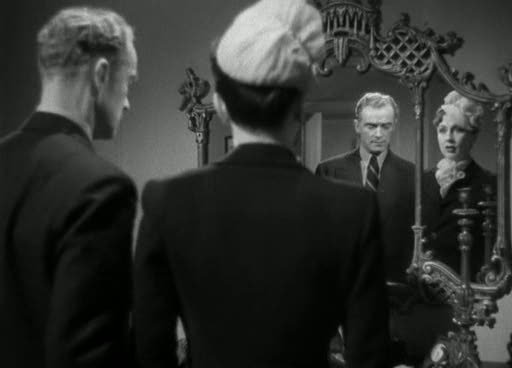
Charles Barr, in his magnificent survey Ealing Studios, reads the story as a devastating critique of the type of superficial couple that the Courtlands represent. Their vanities (happily describing themselves as a“handsome couple”, who “dress up and spend a lot of money” as a matter of routine) and snobbish dismissals of other people (Joan appears entirely ungrateful for the “frightful presents” they receive; Peter marks Joan’s friend Guy as “hardly the big-game shooting type”) only serve to highlight their own shallow prejudices, and the mirror will come to reveal to them interior blemishes instead of exterior ones. Hamer’s repeated shots of Peter’s reflection framed in the mirror, significantly at times in a separate panel to that of his wife-to-be, seems to illustrate his isolation from the world around him, and even from the woman ostensibly closest to him.

Barr names the central themes as repression and complacency: Peter’s repressed frustration with the mundanity of his life coupled with his sneaking suspicion that his wife-to-be is unsatisfied in their relationship exposes the lack of trust between them and the blasé manner in which they disregard their true feelings, as well as explaining his increasingly extreme reactions to the vision in the mirror. He concludes that the segment’s conclusion is in effect a ‘lobotomy’ for the couple: they will learn nothing from the experience and go back to their bad old ways. I am not entirely sure whether it is as dire as Barr’s reading; after all, Joan has enough faith in her husband to find out about the mirror’s history, and her eventual solution to the problem illustrates her willingness to make a leap of faith for him. Interestingly, Hamer will come to use the motif of the mirror again to return to a similar theme in his later It Always Rains on Sunday (1947), again starring Googie Withers.

The following segment is the most controversial one of the film, since its lightly-comic tone is at odds with the other, more sinister tales which it rubs shoulders with. “Golfing Story”, directed by Charles Crichton, stars Naunton Wayne and Basil Radford who seven years earlier had stormed to popularity as Charters and Caldicott, the uproariously witty and irreverent cricket-obsessed passengers aboard the train in Alfred Hitchcock’s The Lady Vanishes (1938). The characters proved so popular that they would make cameos in a number of subsequent films, most significantly Carol Reed’s Night Train to Munich (1940).

Their appearance in Dead of Night is as a pair of very similar characters named Parratt and Potter, once again well-to-do Englishmen with the same penchants for sport and making double entendres with one another. Once again, though, sexual matters intrude, this time with the arrival at their golf club of the beautiful Mary; the pair are both instantly smitten with her, and unable to decide who should be allowed to court her, contrive to hold a golf play-off to decide the matter. Parratt wins, and in a pair of shots which strangely predict a similar scene in Mizoguchi’s Sanshō Dayu (1954), Potter solemnly trudges to his death in a nearby river. Parratt, though, has cheated, and soon becomes tormented by the ghost of his former buddy, both on and off the links.
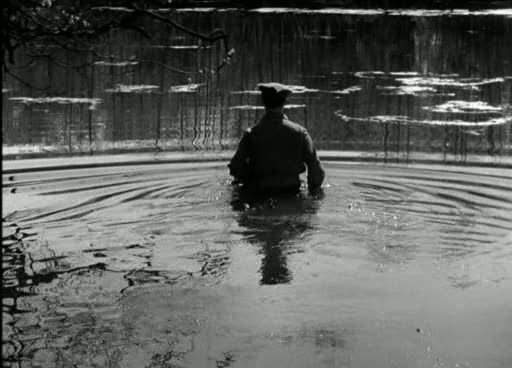
Golfing Story comes as a moment of levity in what is otherwise a solemn film, but is its presence entirely necessary? Sandwiched between the harrowing Haunted Mirror and Ventriloquist’s Dummy segments it may seem an unwelcome distraction from the crescendoing sense of fear contained within the separate stories. One might conversely argue that it creates a chiaroscuro of tone which enhances the effectiveness of the other two stories; certainly in its place was a story of the lesser quality of, say, the Hearse Driver episode, one might suggest that the film as a whole might suffer more as a consequence. The story does also set up an ellipsis within the link-narrative, in which time Craig has decided not to leave Pilgrim’s Farm but instead to remain, the now-jovial atmosphere calming him his fears in time for the film’s final, most horrifying chapter.

Ventriloquist’s Dummy” is rightfully the film’s most well-remembered episode, and lasting more than 23 minutes it is by far its longest section. The key to its success lies perhaps not in the story itself but in what is invested into it by Michael Redgrave’s extraordinary central performance as Maxwell Frere, the ventriloquist apparently being tormented by his own dummy. In fact, to award him with just one acting credit seems woefully inadequate: it what is in effect his double-performance which leaves the viewer considering the possibility that he could be embodying two separate personae that makes the story so gripping and ultimately terrifying.
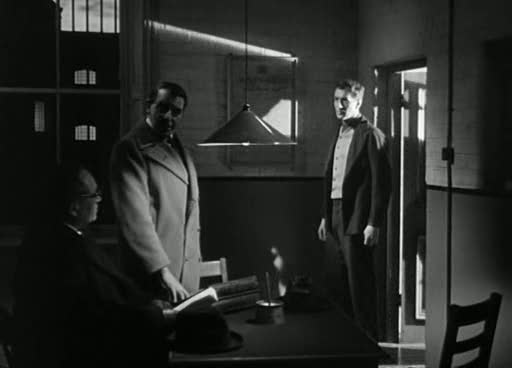
As the story begins, Frere is called into a noirishly lit police interrogation room by Dr Van Straaten, who is attempting to ascertain psychological reasons why he had attempted to murder his fellow ventriloquist Sylvester Kee; Frere refuses to cooperate, and insists that Hugo, his dummy, is the one who is to blame. In a flashback contained within the wider flashback of the segment as a whole we are transported to a Parisian club where we witness Maxwell and Hugo in action (the geographical setting seems to underline that Maxwell’s surname is very close to the French word for ‘brother’). We see the common dynamic of a ventriloquism act: Maxwell plays the straight-man to Hugo’s sharp-tongued witticisms and occasionally risqué comments. In the audience is an impressed Kee, who ‘Hugo’ invites to meet him backstage at the end of the performance.

Once backstage, the ambiguity of the situation arises: in the darkened room, Kee hears Hugo’s voice and chances upon the solitary puppet, whereupon Maxwell enters the room smoking a cigarette, apparently oblivious to what his puppet has been saying; can he have been speaking, or is Hugo a genuinely autonomous entity? The divide in their personalities seems an amplified version of their onstage ones: Maxwell is a nervous wreck, in diametric opposition to Hugo’s boastful charm. In the following scene, a group of women recognise Maxwell and Hugo at a bar, but when they approach them are drawn to the puppet and not his drunken master. Once again, doubts surface: how can this articulate puppet be being manipulated by someone who is clearly an inebriated wreck?
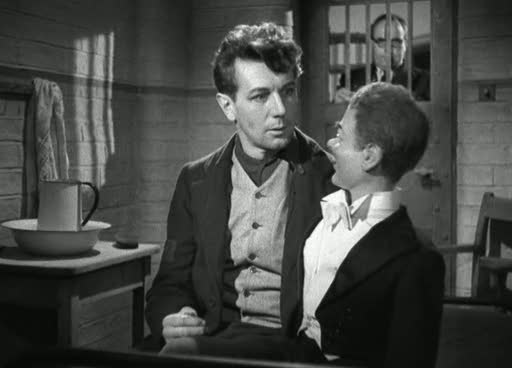
Alberto Cavalcanti’s previous film Champagne Charlie had been a light-hearted look at the world of entertainment, but Ventriloquist’s Dummy is its darkly sinister reflection, as if glimpsing itself in the mirror of the Hamer segment. A more straightforward parable about the nature of performance might have the off-stage entertainer unable to cope with everyday life away from the spotlight, but here the dynamic is subtly different: there is the possibility that Maxwell has repressed his own personality so much as part of his stage-persona that he is now unable to behave otherwise, but the nagging possibility that Hugo could indeed be a sentient, autonomous being pushes the story into the ambiguous and the supernatural, which is all-the-more frightening. The unsettling denouement pre-dates the strikingly-similar one used in Psycho (1960) by nearly two decades, though a shot containing a very disorientating Hitchcock-like rotation of the camera illustrates that more than likely the influence was mutual.

The film makes a final return to Pilgrim’s Farm and its gathered guests, and leads into what must rank as one of cinema’s greatest ever final reels. As Foley’s power generator fails, the house is thrown into long shadows reminiscent of those associated with the unreal in the film’s various chapters, signalling an entry into the fantasy realm that the stories themselves had. Like the recapitulation of a great symphony, the film’s various motifs begin to swarm around each other, in doing so forming unexpected patterns and resonances, and leading towards that famous montage exposing the full extent of Craig’s nightmare. As this closes, I am ever-reminded of a similar scene in Les Diaboliques (1955) when a character appears to do the impossible, and as with Clouzot’s film it is best not to spoil the big surprise for others.

Even Craig’s apparent demise does not constitute the ending of the film, and its final surprise turns the entire film on its head once again. The film’s lasting influence has perhaps diminished the shock of this device, its having been used – though never in an identical way, and more commonly for different effect – in films as diverse as Belle De Jour (1967), La Jetée (1962), Lost Highway (1997), Twelve Monkeys (1995), and most recently in Christopher Smith psychological thriller Triangle (2009); its philosophical implications may also have been explored more fully in Groundhog Day (1993), but with the element of surprise lessened, the modern viewer might more readily be able to reflect on the film’s structural perfection.

Focusing on this novel aspect of the film’s meta-structure is to downplay its bigger legacy which was the rise of the anthology horror film. It was not the first – a German film entitled Unheimliche Geschichten (1919) has the best claim to that particular title – but its quality and popular success gave rise to countless imitators, serving as a template for the cycle of Amicus anthologies, most obviously Freddie Francis’ Dr. Terror’s House of Horrors (1965) which closely mimics Dead of Night‘s framing story. Amicus producer Milton Subotsky described Dead of Night as “the greatest horror film ever”; it is not difficult to see why.

Dead of Night stands out as a curious anomaly in Ealing Studios’ roster, even though the diversity of its output is frequently underestimated in favour of the famous comedies it produced in that remarkable run of films in the decade after World War Two. While it is easy to look back fondly on those comedies for their quaintness and sense of an England (however false) of yesteryear, Dead of Night by contrast retains a freshness simply because its emphasis is entirely different; what is more timeless than a ghost story? Another useful comparison is with Hitchcock’s Spellbound, released the same year and also adapted by Angus MacPhail, but dated horribly by its reliance on quasi-Freudian pop psychology; Dead of Night‘s meditations on perception, reality, mortality, dreams and artistic sacrifice continue to make it as thrilling and disturbing a ride as it has ever been.