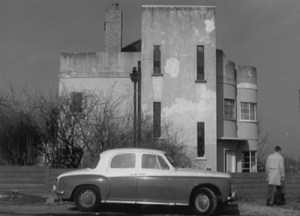
 When one thinks of a road movie, the images that instantly spring to mind are of endless journeys along long, dusty American highways, man and motor fused together amidst desolate, inhospitable surrounds, of Two Lane Blacktop (1971), Easy Rider (1969) or Vanishing Point (1971). What does not think of is the quiet, two-hour drive west from London to Bristol, but that is exactly what Radio On, the 1979 debut feature by film critic Christopher Petit, offers up instead. A reinvention of the road movie genre for England, it is a film with few precedents and no antecedents, but remains a fascinating portrait of a very particular place and time.
The story, for what it’s worth, concerns the Kafka-esque monickered Robert B, a late-night London DJ who receives news of his brother’s death in Bristol, and ostensibly sets out on a road trip to investigate the circumstances. Along the way, he stops off at a pub, picks up a hitchhiker, meets a man living in a caravan, eventually alighting in Bristol where he encounters and befriends a German lady estranged from her daughter. But what becomes evident early on from the almost entire absence of narrative thrust is that this is not a film about mystery or plot, but a mood piece, a piece of British arthouse cinema not ashamed to wear its European influences on its sleeve.
The most obvious debt, as is clear from as early on as the opening credits, is to Wim Wenders, associate producer of the movie, as well as its clear spiritual forefather. His German road movie trilogy, Alice in the Cities (1974), The Wrong Move (1975), and Kings of the Road (1976) is the obvious stylistic influence here, in particular the monochrome photography (Wenders loaned his own DP Robby Müller to Petit for the making of the film), but also the use of long shot lengths, allowing the camera to linger on scenes much longer than would be conventional, giving a feeling of melancholy reflection.
For a road movie, there is a remarkable lack of a sense of liberty — driving scenes are mostly confined to shots filmed from inside the vehicle, and the framing of the windscreen gives less of the impression of the freedom of the open road a la Easy Rider, but at times more like the trapped Marcello Mastroianni attempting to escape at the start of 8½ (1963). In this sense it is different from the Wenders films, and perhaps more reflecting the size of the British Isles — no road journey in one direction can last much longer than a few hours by definition, so how much a sense of freedom can there be?
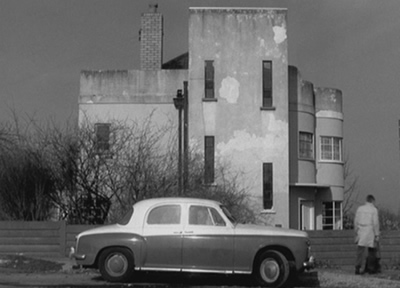
One of the unusual aspects of the film is its unromanticized view of 1970s England. No criticism of the film I have yet read has not mentioned the adjective “Ballardian” to describe the early shots of the capital, a London not of the Ritz and Buckingham Palace, but of ugly industry, dreary tower-blocks, and somehow menacing motorway flyovers. These early shots, coupled with the later similar views of Bristol are oddly reminiscent of the Paris of Godard’s Alphaville (1965), or possibly the corner of Rome in Antonioni’s L’Eclisse (1962) — the use of contemporary architecture to predict a dystopian future.
More in common with the latter of these cinematic references, the film’s somewhat nightmarish urban geography gives us the context of the film’s making, Britain of the late 1970s, as do other cues: the Krautrock soundtrack of Kraftwerk and Berlin-era Bowie, the filtering in of new technologies such as audio cassettes and video games. Snippets of radio news reports offer the further context of ongoing IRA terrorist campaigns, anti-pornography raids, and violence underlying an England far removed from the austerity of the Fifties or the Swinging Sixties. If the film’s title is a reference to Jonathan Richman’s song Roadrunner, then it does not appear to share the singer’s being “in love with the modern world”.
This urban decay is in stark contrast to the pastoral countryside we see on the journey between the two cities, and the difference between these two Englands becomes a further point of interest. In a later scene, we enter an older lady’s very middle-class household, the formality of her matching china teacups the epitome of picture-postcard British bourgeois living, and in direct contrast to the lives of everybody else we have seen in the film so far. Radio On feels a companion piece to post-punk’s musical prediction of the civil unrest to follow under the Thatcher regime in the coming decade, in that it flags up the dichotomy between the vision of a supposed classless social ideal and the unfortunate reality of such a folly.
There is a wider point also here, regarding Britain’s place in the world. On the one hand, there are many references to the closeness with Europe, in particular Germany, not just in the score, the visual aesthetic, and the prominent presence of German actress Lisa Kreuze, but also in more subtle ways, for instance the quiet paralleling of experiences of IRA and Baader-Meinhof terrorism. Even the credits appear bi-lingual in both English and German. And given that this is an existential road movie, is not existentialism itself a strictly European invention? At the time, Britain was seeing rising Euro-scepticism, and perhaps the film was calling on people to move closer rather than pull away from their continental cousins.
Conversely, there are glimpses of America, much like we see in Wenders’ own Alice in the Cities (1974), but these seem strangely alien and forced. B encounters a man, played by none other than Sting, who lives in a caravan close to the spot where Eddie Cochran died in a car crash in 1960. He sings “Three Steps To Heaven,” but the juxtaposition of the song to the setting of a quiet road outside the village of Chippenham reduces it to the absurd. Later on, B admires the lines of a vintage Cadillac and sits in it, only to be told “it doesn’t suit you.” When he drinks – swigging from a can of Guinness at the wheel, a hip flask on a seaside pier, or a solitary pint in a pub – he lacks the cool sheen of Hollywood’s alcoholic anti-heroes.
If B lacks cinematic cool, then he is also lacking in many other respects; his detachment from any kind of emotional response, whether the death of his brother, the affections of a beautiful woman, or being beaten up in a pub position him closer to the Mersault of Camus’ L’Etranger than any of the Kafka protagonists his name would suggest. His very blankness does render him lacking in a certain degree of sympathy, though it does allow him to be a cipher to explore other characters’ behaviors and attitudes. He, like the film, appears to have come from nothing, and does not appear to lead towards anything.
One scene, and in particular one song, lingers more than others. A pub jukebox plays Wreckless Eric’s “Whole Wide World” almost in its entirety, while B just sits down and slowly finishes his pint. What does it mean? Seemingly nothing. The song, incidentally, is one of the greatest to emerge from the punk period, a deceptively simple song about being lonely but spurred on by hopes however impossible. Perhaps it offers a key to this film about trying to find something, but not knowing what that thing is or where to go about finding it.

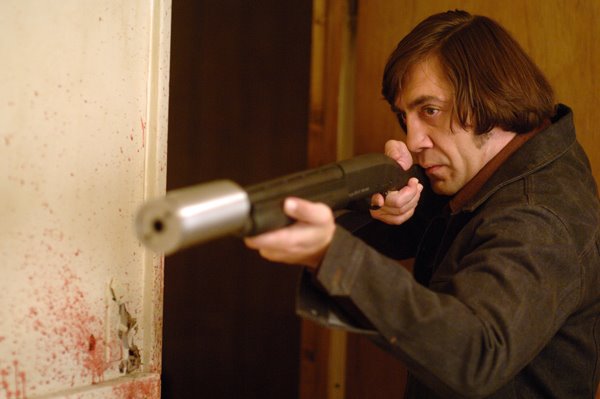 4. No Country for Old Men (Joel & Ethan Coen)
 3. 4 Months, 3 Weeks and 2 Days (Cristian Mungiu)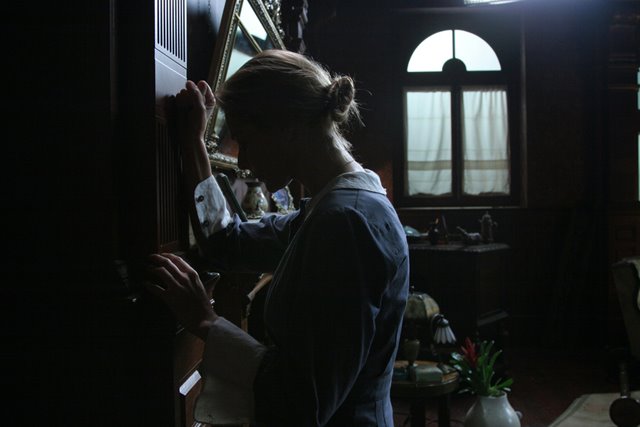

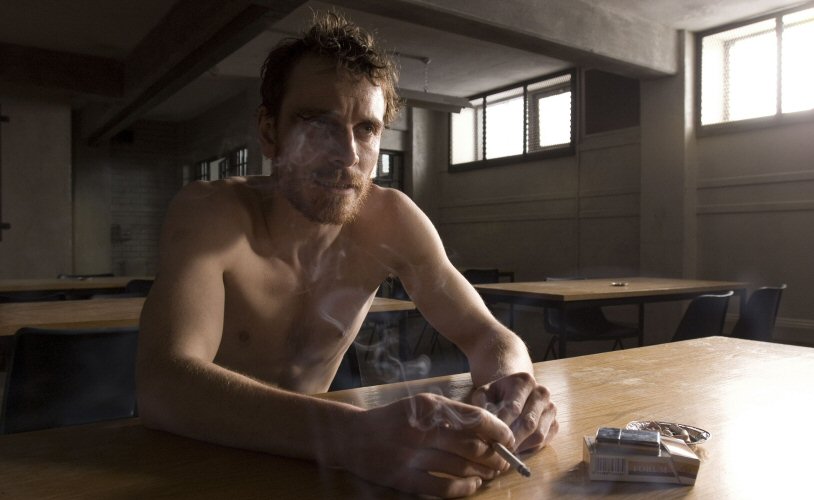

 Serene Velocity