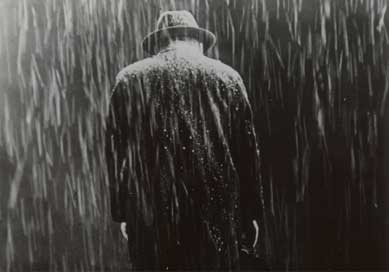
Great films: Ikiru (Akira Kurosawa, 1952, Japan)

Ikiru is Akira Kurosawa’s masterpiece, an intensly moving exploration of one man’s search for meaning in his life when confronted with death, but also a film which makes we the audience question what it means to truly be alive. But it is also much more than this; it is a portrait of a ravaged postwar Japan, an indictment of an increasingly hedonistic, nihilistic society, and an examination of generational conflict and dysfunctional family dynamics.

By 1952 director Akira Kurosawa was already a legend, with a substantial body of work to his name; in ten years he had directed twelve feature films, including bona fide masterpieces such as Stray Dog, Drunken Angel and Rashomon. He had also by this time developed his unmistakable visual style, and assembled his regular cast of collaborators – actors, screenwriters Shinobu Hashimoto and Hideo Oguni, cinematographer Asakazu Nakai, art director Yoshiro Muraki, scorer Fumio Haysaka – with whom he would continue to work with for another ten years.

Amongst his regular acting collaborators was Takashi Shimura, who had appeared in Kurosawa’s first film, Sanshiro Sugata, as well as having taken leading roles in Rashomon, Stray Dog and Drunken Angel. He was a man of 47 years of age when Ikiru was filmed, and would later go on to play the brave leader in Seven Samurai. But in Ikiru he performs one of cinema’s great transformations, if not the greatest: he becomes old man Watanabe, the central character in the story, whose permanently hunched demeanour and world-weary face look more like a man approaching 80, let alone 50 years of age.

Watanabe is an ageing bureaucrat, whose monotonous job appears simply to rubber stamp various official government pieces of paper passing under his nose, a job he has been doing for decades, without fail. He has become a bit of a figure of fun at the office, referred to as “the mummy” by his co-workers for his expressionless but permanent presence there. We find out later that his commitment to this seemingly meaningless role has taken its toll on his family life: his son treats him with scorn and disregard, having been emotionally alienated from him a long time before, much like the son in Ingmar Bergman’s Wild Strawberries.

However, one day Watanabe is not at his desk, causing consternation amongst his colleagues. He has, in fact, gone to see a doctor, where he discovers that he has that he has stomach cancer, with only months to live. This sends him into a spiral of depression, and also nihilism. “I just can’t die – I don’t know what I’ve been living for all of these years” he confides. He goes to drown his sorrows at a sake bar, where he encounters a young writer who urges him to enjoy the time he has remaining hedonistically, with women, drink and gambling in the wild neon-lit paradise of postwar Tokyo.

These night-time pleasures prove unfulfilling for Watanabe, not part of this new, young Japan. However, he encounters an ex-colleague, a young woman who has quit the office because she found it unfulfilling. He is attracted to her bright, breezy optimism and joi de vivre, and tries to spend more time with her, taking her to pachinko parlours and the movies. But she soon grows weary of his company, finding him a little creepy, and demands to know why he wants to spend so much time with her. He tells her about his illness, and how he is trying to find meaning in his life, and she tells him about her new job: making wind-up toy rabbits for children. This, she says, may be long, hard work, but she enjoys it because she feels like she is playing with every child in Japan.

Children in Kurosawa’s films serve as a motif for an innocence, but also a wisdom that the adult world seems to forget, or ignore. In Ikiru, Watanabe seeks his own spiritual fulfilment by attempting to fight the bureacracy he was so long a part of, and get built a children’s playground which had been campaigned for, but stalled by the powers that be. The final third of the film is centred on Watanabe’s wake, where a series of drunken, rowdy mourners contemplate what happened to him in those final months of his life to change him from humble pen-pusher to campaigning crusader.

Few films, if any, have the kind of emotional resonance that Ikiru has. In Watanabe, we at first see a rather pathetic man, living life unquestioningly, but having little or no connection with other people, or indeed life itself. But the final third of the film seems to suggest something else: the mourners claim to revere his heroic actions, but we know that this is just drunken over-indulgence, and that they will all go back to their routine existences, hungover, in the following morning. In doing this, the film is also fingering us the audience: are we guilty of the same ‘crime’ that Watanabe was, before his transformation? His triumph is his own, his knowledge of the bureacracy he was once a part of helping him to work it for worthwhile ends. Kurosawa is asking us to consider similar in our own lives, in the words of Danish existentialist philosopher Soren Kierkegaard, ‘to become ourselves’.

As previously mentioned, the film does not just function on this level of pathos, it is much more a profound look at postwar Japan, like much of Kurosawa’s work at this time. Watanabe’s stomach cancer is emblematic of a country still dealing with the toxic fallout of the Hiroshima and Nagasaki bombings, as well as the more general incidence of disease brought on by years of war. It should also be noted that the stomach is an important symbol in Japanese culture, in a way considered the location of the soul, much like the heart is in the West. That this is the location of his illness is as much an indication of his spiritual malaise as much as a physical one.

Interestingly, the film also touches on the class differences which were beginning to emerge at the time; Watanabe’s son is seen as part of a new bourgeoisie, but it is implied that Watanabe himself and his colleagues are urban poor. Their lives are markedly different from those we might find in, say, a Yasujiro Ozu film, who generally are middle-class. In one scene, where Watanabe and his young female friend Toyo meet for the last time, we see in the background a group of wealthy young girls celebrating a birthday; their wealth is a sly juxtaposition to Toyo’s relative poverty, underlining her need to slave away in a factory making children’s toys. She, like Watanabe and many others, is not one of those benefitting from Japan’s postwar prosperity.

Much has been made of the formal and structural innovations of Kurosawa’s other films of the period, in particular Rashomon and Seven Samurai. But Ikiru is no less daring. Consider the last third of the film, with the main character absent except in flashback. Some of the visual tricks are still astonishing; one breathtaking crane shot, as Watanabe and his young writer companion ascend into the Tokyo nightlife is still a miracle of construction, as is the astounding montage of flashbacks when Watanabe is remembering his relationship with his son over the years. There are also some quite extraordinarily emotional scenes: Watanabe crying himself to sleep, with the camera slowly juxtaposing his certificate of commendation mounted on the wall; the casual disregard his son and daughter-in-law shows for him. But the one iconic scene, that of Watanabe’s final moments, is truly astonishing, the most joyous yet melancholy film moment I think I will ever see.

Ikiru translates into English roughly as “To Live”, and yet it is a film about death. I have always quipped that it should be called ‘It’s a Wonderful Death’ – a Nabokovian mirror-image of the Capra classic, but instead of a man who thinks he wants to die finding a reason to keep on living, we have here a man who thinks he wants to live but finds a reason to die, in Camus’ words, ‘A Happy Death’. Another parallel film is Bergman’s Wild Strawberries, in which an ageing professor contemplates the emotional failures in his life, but finds reconciliation, and a kind of rebirth, in the end. Both films seek to avoid melodrama, or unrealistically overcooked happy endings, but are more satisfying and moving for that. Kurosawa’s timeless masterpiece shows us that it is when confronted with death that we actually discover what it means to live.
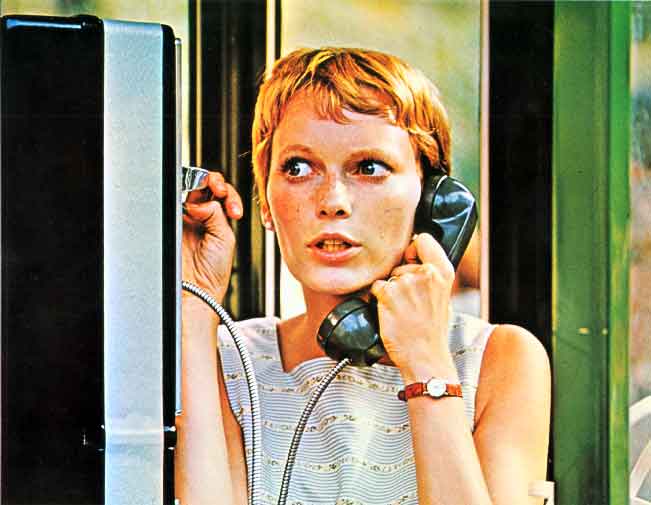
Great Films: Rosemary’s Baby (Roman Polanski, 1968, USA)


It is easy now to underestimate both the impact and influence of Roman Polanski’s Rosemary’s Baby these days, but it must be remembered that it is still both one of cinema’s seminal thrillers, and a cast-iron landmark in the development of the horror genre. It is also, though the movement would like to deny Polanski this, an important early cinematic feminist text, perhaps the finest examination of the idea of the female experience of childbirth.

At the centre of the film is our epnoymous protagonist, Rosemary Woodhouse, played by Mia Farrow. After the opening languorous aerial shot of New York City, slowly converging on a shot of a rather gothic-looking apartment building, we are introduced to her and her actor husband Guy, a strugging actor. They appear to lead a seemingly ordinary vaguely-bohemian urban existence, and their relationship may not be Hollywood-perfect, but is homely and realistic – they occasionally fight, but more often than not are happy in each other’s company. The couple are newly moved into the aforementioned tenement block, where they encounter their new neighbours the Castavets, an elderly couple who seem personable, if a little nosey. Rosemary, whilst doing her laundry, also encounters Terry, a girl who has been taken in by the Castavets, who elucidates that the elderly couple had taken her in from off the streets; she soon meets an untimely death, a defenestration onto the sidewalk below.

From this point onwards, we escape the “Doris Day film” aesthetic that the film had thusfar adopted, and enter our slow descent into a Dante-like Inferno. A stroke of luck befalls Rosemary’s husband – the actor he was understudying for in a theatre production is blinded in a freak accident, leaving Guy in the lead role of a major play. At the same time, the couple agree to have a baby together, but during the proposed night of conception Rosemary passes out, and dreams that a horrifying beast rapes her. She later discovers she has fallen pregnant, but begins to suspect that all is not right with the pregnancy, and that she may be the centre of a macabre plot involving the Castavets, her new obstetrician, and perhaps even her husband. Was his ‘lucky break’ a result of something more sinister?

Thrillers, particularly in the Hitchcock mould, tend to teasingly throw the viewer occasional scraps of useful information, and the first act of the film offers much exposition, seemingly too much, in a series of quickly-cut scenes. We get the sense that something is afoot very early on, but perhaps initially share our protagonist’s optimism that all is well, and that there is no consipiracy against her and her unborn child. However, as the narrative unfolds, there is a strange dichotomy between this and the increasingly concrete sense that yes, actually our worst fears are being realised. Our expectations are being toyed with here; Polanski consistently gives us proof of a sinister plot, but even as the tension gradually rises and rises and rises, there is perhaps still the nagging doubt that it could all be the wild imagination of the pregnant and vulnerable Rosemary.

Central to this is the very idea of pregnancy; a new, unseen life existing within a woman’s body, both dependent and independent on its host. The film is keen to stress the effect on the mothers physiology; the pains, the initial loss of weight followed by the later gains. But more importantly we experience the psychological toll of the process; the sense of expectation, coupled with the fears and anxieties associated with it. David Cronenberg once said of his seminal body-horror Dead Ringers that the idea of a film about twin gynecologists held more of a sense of horror to the male viewer than the female viewer. It seems to me the same can be said of Rosemary’s Baby, and laterly in Ridley Scott’s Alien; the idea of childbirth being a mystery, a thing of fascination, but also an intimidating subject of fear for the male psyche.

Mia Farrow’s central performance is astonishing. Her Rosemary begins the film as a self-confident, bubbly and bright boho, but ends an emotional and neurological wreck. One astounding scene in a phone-booth, and later in a doctor’s office, shows her ability and range as an actor. I loved her in her Woody Allen collaborations (Alice, Zelig, The Purple Rose of Cairo, Hannah and Her Sisters, Crimes and Misdemeanors, to name but a few), but here she gives her most rounded, attention-grabbing performance. John Cassavetes has always been too theatrical for me, particularly in his self-directed films, and here is no exception, though i guess Guy is supposed to be a little over-the-top. The filmis perhaps stolen, though, by Ruth Gordon and Sidney Blackmer as the ageing Castavet couple, whose mixture of nosiness and enigmaticness provide a great deal of the suspense of the film.

Rosemary’s Baby is in many ways a landmark film. It was Polanski’s first Hollywood film, and certainly his best until Chinatown (1974), demonstrating his distinctive style, and his complete mastery of mise en scene. But, like The Exorcist, it is most important for giving a new respectability to the horror genre, which had been much maligned previously. It’s influence on this area of cinema history, whether in direct reference, such as Dario Argento’s Suspiria or Stuart Gordon’s Re-Animator, or in indirect tribute such as most of David Cronenberg’s oeuvre, that may prove to be its greatest legacy. It’s a bloody great film too.

Great Films: The King of Comedy (Martin Scorsese, 1983, USA)

One of the great Martin Scorsese films, and featuring a career-best performance by Robert De Niro, yet strangely not generally well-known or well-loved, The King of Comedy is perhaps too difficult a film to attract widespread mainstream appeal. But for those who know and love it, it is one of the greatest character studies in cinema, and a savage swipe at the culture of celebrity.

Scorsese’s best films, from Mean Streets onwards, have focused on individuals with conflicting ideas about their own identities, and how these fit in with the expectations of their friends, followers and peers. Mean Streets confronted us with Charlie Cappa’s self-doubt, and feelings of responsibility for his wild friend Jonny Boy, even when this becomes self-destructive. Taxi Driver focused on Travis Bickle, lonely and alienated from society but wanting to make a difference, to have some reason for existence. Raging Bull was an exploration of how boxer Jake La Motta’s enforced repression of his confused sexuality resulted in violent self-destruction.

Taxi Driver and Raging Bull present us with odd, rather pathetic and dislikable protagonists; but in The King of Comedy we see Scorsese’s greatest anti-hero: Rupert Pupkin. At first he appears harmless, even an object for our sympathy: his gaudy clothing, awful sense of humour, terrible chat-up lines, the way that everyone pronounces his name wrong. His general pitifulness seem to suggest that this is a born-loser, a man who in many a film we would like to see ultimately triumph and find his redemption.

This is where The King of Comedy is difficult; as the film progresses we see more and more that Pupkin is not a sympathetic character at all. He is a vain egotist, utterly convinced of his own self importance, with seemingly no regard for anyone: not his mother, not his friends, not his colleagues, not even Jerry Langford, the talk-show host he apparently reveres. Also, through a series of slightly unreal sequences, we can see that he is a Walter Mitty-like fantasist who sees himself as a famous talk-show host and comedian. What is wrong with this, you may ask? The film makes it abundantly clear that this fantasy world is what is feeding into his deluded self-regard, turning him into more and more of a sociopathic monster. With this, this pathetic character, far from being a harmless geek, becomes more and more appalling. His permanent false smile and kindly tone scarcely hide his contempt for everyone and everything standing in his way from stardom.

One fantasy scene sums all of this up. Pupkin’s old school headmaster, who clearly used to dislike him, appears on a nationwide television show to perform a marriage ceremony between Pupkin and Rita, the popular girl he wanted to ask out at school. During the ‘ceremony’, the teacher asks for Rupert’s forgiveness for the way everyone treated him when he was younger, and to thank him for the “meaning you’ve given to our lives”. What Pupkin is dreaming is not some idle boyish fantasy; he is creating a completely fabricated redemption for himself and his failures in life, and motivated not out of despair, but from a desire for revenge.

The strange tone of the film is an intriguing one. Unlike other Scorsese films, there is no real sense of physical menace; instead we see a something different, and perhaps more menacing: celebrity. It inhabits the film, from both sides of the fame divide: Pupkin’s delusions of grandeur and bizarre fantasy world, and Jerry Langford’s interactions with the general New York public in the street – sometimes pleasant, sometimes abusive. Pupkin wants to enter this apparently glamourous, mysterious world, while at times Langford seems to want to escape it. As is so often Scorsese’s trademark, New York is at the centre of this; Langford at the top of inpenetrable ivory towers, Pupkin and his co-conspirator Masha down at street level with the ‘street scum’.

What was Scorsese’s intent in making the film? I see it as a direct companion piece to Taxi Driver, but as that film’s evil alter-ego. Both films’ protagonists are loners, wanting to find meaning in their lives. But while Travis Bickle is confused and not sure how to go about finding his raison d’etre, eventually comitting a violent act which leads to his ‘redemption’, Rupert Pupkin is motivated by hate and revenge, but achieves his success by other means. It is commonly thought that the film’s creation was inspired by the attempted assassination of Ronald Reagan in 1981, by John Hinckley, Jr. He was said to have been obsessed by Jodie Foster, and ‘inspired’ to into his act by Taxi Driver. His fascination for fame and celebrity may well have provoked Scorsese into making a sarcastic comment about the increasingly volatile nature of this culture.

The film’s lead and support performances are superb. Jerry Lewis is great as the ageing, weary talkshow host Jerry Langford. Sandra Bernhard is wonderfully unhinged as the obsessive Masha; one memorable scene where the two have a dinner ‘date’, after the latter has kidnapped and tied up the former, is simultaneously hilarious and disturbing (two words which often apply to Bernhard). There are excellent supports from Shelley Hack and Diahnne Abbott, and numerous cameos including Tony Randall, Joyce Brothers, Scorsese himself and various members of his family, as well as a cardboard Liza Minelli. Pay close attention and you can also spot members of The Clash in the background to one scene.

But the film belongs to Robert De Niro. His transformation into the pathetic, creepy Rupert Pupkin is simply breathtaking. Consider his previous roles: Jake La Motta, Vito Corleone, Johnny Boy, Travis Bickle; none bear any resemblance to what is on show here. In one early, brief shot we see Pupkin push at a ‘pull’ door, before realising his error and pulling it. Amazingly, in what is a seemingly simple gesture, we see De Niro invest in his character a lifetime of pain – watch carefully how he reacts physically, his body exhibiting a depressed but predictable resignation. Easily missed, but simply amazing. Later in the film, there is an extended one-take scene where he performs a long stand-up comedy routine, in character; ever the Method actor, there is the rumour that he researched the role by closely studying other stand-up comedians, and eventually performing his own routines onstage himself. The brilliance of his performance, though, is not that he is a fantastic comedian; it is that he is terrible. The old adage goes that a great actor can play a bad actor well. By the same logic, it takes a great performer to play a bad one. De Niro does this.

The King of Comedy was a flop on its release, grossing only $2.5million on a budget of $20million. It simply did not find an audience, probably arising from the problem that it was a film with ‘comedy’ in the title, yet it wasn’t actually that funny. However, it is slowly beginning to be recognised as a true classic, and more and more viewers are seeing it for what it actually is: a sharp, savage satire on fame and the dislikable misfits who seek to gain it at any cost. It is more relevant than ever given today’s obsession with the culture of celebrity.

Great Films: Brazil (Terry Gilliam, 1985, UK)

Proof, as if it were really needed, that Terry Gilliam is not only one of the true visionaries of late-twentieth century cinema, but one of the finest visual directors of all-time. Brazil is a unique masterwork of style, ideas, darkness and humour, the product of a director who ever since has all too often been hampered by studio interference.

Gilliam, whether he would like the description or not, is a true auteur, as argued here. His films are fantasies, whether dystopian future visions or medieval romps, with a love for all things natural over the mechanical. Nowhere is this more evident than in the world of Brazil: a nightmarish, if rather comical, world of paperwork, faceless bureaucracy and anonymous pen-pushers. Mention of this kind of dystopia immediately raises the spectre of those two pillars of twentieth-century British fiction, Aldous Huxley’s Brave New World and George Orwell’s 1984. Both are touchstones here; indeed the film’s working title was 1984½ (an allusion also to Fellini’s , one of the film’s other key reference points). But the world that is created here is strictly Gilliam’s, bursting at the seams with absurdities and dark humour.

It is also one of his most visually striking films. The world we enter is a grey, lifeless metropolis, evoking that of Fritz Lang, as well as Godard’s future-noir Alphaville. Inside, the rooms within houses are filled with malfunctioning futuristic appliances, and filled with large, menacing looking ducts, presumably required to maintain these conveniences’ manfunctionality. These ducts are omnipresent; well hidden in the more well-to-do homes, but intrusively hanging and sticking out in the poorer homes. Elsewhere, a restaurant’s menu offers a wide variety of exotic foods, but they all arrive as gaudily-coloured blobs ungainly dolloped on a plate.

At the centre of it all is Sam Lowry, a low-level worker in the bureaucratic government machine, whose dreams of flight and romance are at odds with his drab, routine day-to-day life. When his well-connected mother procures him the offer of a promotion, he initially turns it down, contented not to work his way up the metaphorical greasy pole. However, a chance encounter with someone resembling the woman he sees in his dreams encourages him to take the offer, hoping it can lead him to her.

The bare bones of the setup perhaps seem to offer a love story, but the film fails to satisfactorily deliver on this; there is little real chemistry between Sam and Jill, the woman he pursues, and we are never entirely convinced of whether Sam is in love with the real Jill or his idealised dream image of her. There is real ambiguity to this side of the film, which makes the recut “Love Conquers All” version, discussed below, all the more bizarre.

As well as this ambiguity, it is also difficult to quantify where the real ‘evil’ in the film lies. There is no personification of a “baddie”; 1984 had its Big Brother, though more of an abstract concept rather than an actual person. The real evil present in the film is shown to be the indifference of ordinary people to each other, and their subservience to the bureaucratic machine. A torturer, a perfectly cast Michael Palin, is shown to be a respectable, affable family man; while he conducts his business, his receptionist casually transcribes the screams coming from the room, totally ambivalent to what she is listening to. At every level of bureacracy, there is at best indifference and at worst complete disregard to common humanity. In the background to this, there is also the spectre of an ongoing terrorist campaign against the government. Explosions kill and injure ordinary people, a seemingly futile act of protest against the system. This adds another level of moral ambiguity to the film, throwing further doubt on the ides of a struggle between good-versus-evil.

Roger Ebert, the prominent American critic, criticised the film for its “lack of discipline”, a charge often levelled at Gilliam’s films. Whilst it is true that the narrative structure is weak at times, and that Brazil is perhaps 15-20 minutes too long (again, something that can be charged at much of the director’s work), it is informative to consider the recut version that was released in the US. Known as the “Love Conquers All” version, it runs to 94 minutes, a full 48 minutes shorter than the European cut, with a heavily modified narrative structure and ending, cuts which Gilliam refused to make himself, fearing artistic compromise. The resulting cut is a travesty, akin to the butchering of Once Upon a Time in America, and if there is the choice between this or the perhaps overlong director’s vision, choosing the latter is a no-brainer.

One of Brazil‘s great strengths lies with the talented crew; Gilliam assembled a fantastic collection of actors, many of whom like Bob Hoskins, Robert De Niro, Jim Broadbent, Ian Lavender and Ian Holm were confined to brief cameo roles. In casting Jonathan Pryce and Kim Griest in the leads, avoiding big star names, he achieves a sense of intrigue and ambiguity in the characters. The set design is also a triumph, as is the superb music by Michael Kamen, who had also recently scored the superb David Cronenberg chiller The Dead Zone. The cinematography is at times stunning, a credit to Gilliam’s frequent collaborating DP Roger Pratt. We feel as if within an epic, faceless dystopia, with its endless corridors, spiralling skyscrapers and gargantuan torture chambers. But also on show is Gilliam’s mastery of deep-focus. The restaurant scene is a particularly magnificent example of this: observe the seemingly innocuous characters in the background, and witness the director’s microscopic attention to detail.

Another of the triumphs of the film is its many subtle references to some of the greats of cinema history, perhaps attempting to show the medium to be the antithesis of the stale, lifeless machinery of bureacracy. There are two major allusions; firstly to Akira Kurosawa’s great masterpiece of pathos, Ikiru, in which a dying bureaucrat tries to find meaning to his life by fighting the machinery of government to get a children’s playground built. The second is Fellini’s 8½; one of the opening shots of sky is almost identical to an early shot in that film, and Sams’ confusion of his dream world and reality is akin to the Marcello Mastroianni character, Guido, in the Fellini film. Littered about the film are countless other nods, some more subtle than others, to other great films; i can spot The Third Man, Battleship Potemkin, M, The Good The Bad and the Ugly, Casablanca, and The Trial. I’m sure there are many more. Gilliam is a cinephile, and i’m sure couldn’t resist paying homage to his spiritual ancestors in this, his masterwork.

Top Five Funniest DVD commentary tracks

DVD commentary tracks appear to be aimed at one of two markets:

a) obsessively geeky fans, who want to know everything ever about their beloved film.

b) people clearly with too much time on their hands.

Sadly, i appear to fall into both camps.

Some can be rather sombre affairs, often befitting the film itself. Peter Cowie’s comments on Criterion’s The Seventh Seal turn into a veritable snore-fest within minutes. Others are strangely subdued: the Zucker/Zucker/Abrahams commentary to Airplane!, surely the funniest film ever made, is really rather dull and technical. Others are perhaps unwittingly funny: Nick Roeg’s mumbled, bumbling words about Don’t Look Now seem comically at odds with the terror on-screen. Here are what i think are some of the funniest, intentionally or not:

1. Monty Python’s The Meaning of Life (Universal)

Trust the Pythons to take full comedic advantage of the format. The commentaries of Jones, Gilliam, Cleese and Palin are strangely subdued, but the real winner is the “Soundtrack For the Lonely”, subtitled “A soundtrack for people watching alone at home”. This basically consists of the sound of a bloke pottering around, answering the phone, making tea and only occasionally making comments about the film, in general completely ignoring it. Very odd, but strangely compelling…

2. Conan the Barbarian (20th Century Fox)

John Milius and Arnie team up on this one, with Milius waxing lyrical about symbolism, cinematography and choreography, whilst Arnold simply getting a bit over-excited every time Conan chops a head off with his sword.

3. This is Spinal Tap (MGM)

Featuring messrs Guest, McKean and Shearer in character as Nigel Tufnell, David St. Hubbins and Derek Smalls. ‘Nuff said, really.

4. Hunter S. Thompson on Fear and Loathing in Las Vegas (Criterion)

The Criterion edition is stuffed with no less than three commentaries: a lively and informative one by Terry Gilliam, a rather tedious one with Johnny Depp and Benicio Del Toro, and then a fantastically grumpy one with author Hunter S. Thompson where he explains how most of the film is wrong, and anyway none of it really happened anyway. Yeah, right.

5. Anything by Werner Herzog, particularly Fitzcarraldo (Anchor Bay)

Always stuffed with tales of crew members, cast, director and Klaus Kinski getting into scrapes, having to cut their own legs off etc.. etc.. all with Herzog’s disctinctly monotone German drawl. Often more dramatic than the films themselves. Brilliant.